Three Different Things Are Called a Denial
The word covers three situations with three different remedies, and picking the wrong remedy costs months. Read the letter and work out which one you have.
A coverage denial. The insurer says the loss falls outside the policy — an exclusion applies, or the peril was never covered in the first place. Flood, earth movement, gradual seepage, wear and tear, mold beyond a sublimit.
A conditions denial. The loss is the kind of thing the policy covers, but the insurer says you failed a duty: late notice, failure to protect the property from further damage, no sworn proof of loss submitted, repairs made before inspection, refusal to cooperate with the investigation.
An underpayment presented as a partial denial. Part of the damage is accepted and part is not, or the estimate is simply far below the cost of the work. Nothing was refused in principle; the number is wrong.
The distinction matters because the appraisal clause — the tool most people reach for — resolves only the third. Appraisal decides the amount of loss. It cannot decide whether something is covered, and invoking it on a coverage denial wastes time you may not have.
Read the Letter Against the Policy
A proper denial letter identifies the specific policy language relied on. If it does not, ask for it in writing.
Then compare. Two things turn up more often than you would expect. The clause cited sometimes does not say what the letter implies it says. And the reason is sometimes an internal underwriting guideline rather than contract language at all, which is not a contractual basis for refusing to pay.
Request the full claim file at the same time: the adjuster's report, photographs, field notes, any engineer's or expert report, and the estimate with its line items. In most states you are entitled to a substantial part of this. It is worth reading closely, because inconsistencies between the report and your own photographs are the most direct route to a reversal — a report recording no interior water damage against dated photographs of a stained ceiling is not an argument you have to win, it is a factual error.
The Two Clocks Still Running
Nothing about an appeal pauses either of them.
The proof of loss deadline. If the insurer has requested a sworn statement of loss, the clock runs from the request, commonly sixty days. Missing it hands over a complete defense regardless of the merits of the underlying dispute. If you need longer, ask in writing before it expires.
The suit limitation clause. Your policy contains a contractual deadline for bringing legal action, usually measured from the date of loss and often shorter than the general statute of limitations — one year in some states. Negotiating with an adjuster does not extend it. Several states have also shortened supplemental claim deadlines in recent years. These and the wider set of policyholder protections are covered in your rights during a major insurance emergency.
Diary both the week you receive the letter.
The Escalation Ladder
Work up it. Each step is cheaper than the one after, and skipping to the expensive end rarely helps.
- Written request for reconsideration, addressed to the specific reason given. Attach the new evidence rather than describing it. Ask for a re-inspection where the dispute is about what is physically there.
- Escalate within the carrier to a supervisor or a large-loss unit. Field adjusters have limited authority, and some disputes are simply above their level.
- Complain to the state regulator. Free, and effective on procedural failures. A regulator cannot order an insurer to pay a disputed claim, but it can require a written justification, and a file with a documented timeline problem does not survive that comfortably.
- Invoke appraisal — only if the dispute is about amount. Each side appoints an appraiser, they select an umpire, and the result binds on the number. You pay your own appraiser and share the umpire.
- Mediation, where your state runs a program for residential property disputes. Several do, at low or no cost.
- Legal advice, for coverage denials, bad faith, or where the file has stopped moving. Note that a number of states have changed their fee-shifting rules in recent years, which alters the economics of smaller suits substantially.
Evidence That Actually Moves a Property Claim
General assertions do not. These do.
- Dated photographs from before the loss. The absence of a baseline is what allows ""pre-existing"" to be asserted without contradiction. If you have nothing, look for photographs taken for other reasons — listings, renovation records, family occasions — and see how to build a baseline for next time.
- Independent weather data for your coordinates. Where the argument is storm damage versus gradual deterioration, timestamped hail size, wind speed or freeze-thaw data for your exact address converts an assertion into a documented event.
- A contractor's line-item estimate. Insurer estimates and contractor estimates are usually built in the same estimating software and can be compared directly. Omissions are specific and demonstrable: code-required components, waste percentages, access and steep charges, detach and reset of fixtures.
- An expert report where causation is contested — an engineer on structural questions, a specialist on water intrusion pathways.
- A properly built contents inventory, with identity and condition evidence rather than descriptions. The four separate things you have to prove are set out in proving value on a claim.
On Public Adjusters and That Statistic
A licensed public adjuster works for you rather than the carrier and builds the estimate on your side. On large, complex or contested losses, and on total losses where an inventory must be created from nothing, the fee often pays for itself. On a partial loss with a competent contractor, it often does not.
You will see a figure claiming public adjuster involvement raises settlements by several hundred percent. It is worth knowing that this number comes from an analysis prepared for the Florida legislature concerning claims from the 2005 hurricane season, that the same analysis found a far smaller effect outside catastrophe claims, and that it measures the settlement before the adjuster's fee is deducted. The provenance is set out more fully in the policyholder rights article. Hire one for the reasons above, not because of that number, and check your state's fee cap before signing.
Mistakes That Create Denials
Permanent repairs before inspection. Temporary measures to prevent further damage are required by the policy and reimbursable. Permanent work before the adjuster has seen the damage can support an argument that the investigation was prejudiced. Tarp, photograph, keep receipts, and wait for scope agreement.
Throwing damaged property away. It is evidence. Where disposal is unavoidable, film each item first showing brand, model and damage.
Careless recorded statements. Answer what you know. ""I am not sure"" is a legitimate answer; a guess that later proves wrong reads as inconsistency, and casual phrasing about how long something had been ""like that"" is how maintenance denials get their foundation.
Not tracking additional living expenses. If the home is uninhabitable, the increase in your cost of living is claimable from the day you leave, and it is routinely under-claimed — see what this coverage pays.
Assuming the delay is bad faith. After a regional event, much of it is structural — adjuster availability, reinspection queues, permitting — as described in why claims get delayed. Bad faith is a real remedy with a high bar, and it is state-specific.
Questions People Ask
I already cashed a check. Have I given up?
Usually not. Initial payments are commonly for the undisputed portion. What matters is whether the payment or the accompanying document is expressed as full and final settlement or a release. Read both sides of the check and anything attached to it before depositing.
Water damage or flood — how is it decided?
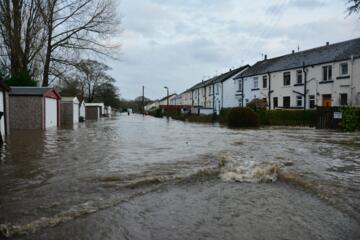
Broadly, water arriving from above or from inside the building is a homeowners question; surface water rising from outside is flood, excluded, and needs separate coverage. Sewer and drain backup is a third category excluded by both unless endorsed. See why floods are usually not covered and flood versus water backup.
Can they cancel me for disputing a claim?
Mid-term cancellation is restricted by state law to narrow grounds. Non-renewal at the end of the term is a different matter and is generally permitted, though many states impose moratoriums in declared disaster areas.
How long does an appeal take?
An internal reconsideration is usually weeks. Appraisal typically resolves in a couple of months. Litigation is measured in many months to years, which is one reason the earlier rungs of the ladder are worth using properly.
Should I stop paying my premium while we argue?
No. Non-payment gives the insurer a clean, unrelated reason to end the policy and complicates everything.
The Short Version
Sort the denial into one of three buckets first: excluded, condition breached, or simply underpaid. Appraisal fixes only the third, and reaching for it on a coverage denial burns time.
Request the complete claim file and compare the adjuster's report against your own photographs. Factual inconsistencies are the fastest route to a reversal, and they are common.
Diary two deadlines that keep running regardless of any appeal: the proof of loss date, and the suit limitation clause in your policy, which may be shorter than you assume.
Then climb the ladder in order — written reconsideration with new evidence, escalation inside the carrier, a free complaint to your state regulator, appraisal if the fight is about a number, and legal advice if it is about coverage.
Sources and Editorial Note
Insurer duties on written denial, investigation timelines and complaint handling derive from state adaptations of the model unfair claims settlement practices act and are administered by each state insurance department, which also handles consumer complaints at no cost. Historical weather records useful in establishing the date and severity of a storm event are published by the NOAA National Centers for Environmental Information. General claims frequency and coverage background is published by the Insurance Information Institute.
The frequently quoted figure claiming public adjuster involvement multiplies settlements by several hundred percent originates in an analysis prepared for the Florida legislature concerning 2005 hurricane season claims; it is not a national or current statistic. Percentage claims about the share of denials caused by missing baseline evidence, or about year-on-year growth in claim disputes, are not traceable to identified sources and have been omitted.
Proof of loss deadlines, suit limitation periods, appraisal availability, supplemental claim windows, public adjuster fee caps, mediation programs, bad faith remedies and fee-shifting rules are all state-specific and have changed recently in several states. This article is general information, not legal advice and not advice on your specific policy — confirm every point against your declarations page and endorsements, and consult an attorney licensed in your state before relying on any deadline.