Your Flood Zone No Longer Sets Your Price
The federal flood programme rebuilt its pricing methodology, and most guidance on this subject still describes the old system.
Under the previous approach, premiums were driven largely by the flood zone shown on a map. Under the current one, pricing is built from the characteristics of your individual structure: distance to a flooding source, the type of flooding you are exposed to, ground elevation relative to the building, foundation type, the height of the lowest floor, and the cost to rebuild.
Two consequences follow, and they cut in opposite directions.
A property in a mapped high-risk zone but well elevated and set back may cost less than it once did. A property outside the mapped zone but low-lying and close to water may cost more than the zone would suggest.
The second consequence matters more for planning. Where the full risk-based price is higher than what a policy currently costs, increases are capped at a percentage each year, so the premium climbs toward the real figure over time. That means the number you are quoted today may not be the number you will be paying in five years. Ask what the full risk-based rate for the property is, not only what it costs now.
The Zone Tells You About the Mortgage, Not About the Risk
Flood maps serve a regulatory purpose: they determine where a federally regulated lender must require coverage. They are not a forecast, they lag development and drainage changes, and a substantial share of flood claims come from properties outside high-risk zones.
So separate two questions that get merged.
Am I required to buy it? Answered by the map and your lender.
Should I buy it? Answered by elevation relative to surrounding ground, drainage, distance to any watercourse including small ones, whether the street has ponded before, and what a few inches of water in your lowest floor would cost. Local floodplain managers hold information the national maps do not, and neighbours who have been there twenty years hold more.
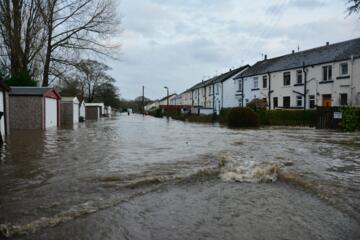
Note also that heavy rainfall flooding in urban areas — the kind produced by drainage that cannot cope — is the type least well represented on the maps and increasingly the type that occurs.
What Federal Flood Coverage Does Not Do
This is where expectations go wrong, and none of it is obvious from the outside.
| Feature | How it actually works |
|---|---|
| Contents settlement | Paid at actual cash value — depreciated — not replacement cost. The building can be at replacement cost; your belongings are not |
| Basements | Severely limited. Finished walls, floors, ceilings and most personal property below grade are largely excluded, with a short list of permitted equipment |
| Living expenses | Not covered at all. If the house is uninhabitable, the cost of living elsewhere is yours |
| Coverage limits | Capped for residential property, at levels that are below the rebuilding cost of many homes |
| Contents cover | Bought separately from building cover. Renters can buy contents alone |
| Waiting period | Generally 30 days, with narrow exceptions including purchase in connection with a loan — see updating coverage before a disaster |
The contents point is the one that surprises people most. A depreciated settlement on furniture, appliances and clothing produces a figure well below what replacing them costs, and there is no endorsement inside the federal programme to change it.
Private Flood Insurance
A private market now exists in most states and is worth quoting alongside the federal option rather than instead of it.
What it often does better: higher limits, replacement cost on contents, additional living expenses, shorter waiting periods, and coverage for basements that the federal programme restricts.
What to check before switching. Private insurers can non-renew or withdraw from an area, which the federal programme does not do. And if you leave federal coverage and later return, any subsidy or rate-capping benefit tied to continuous coverage may not survive the gap — ask specifically about this, because it can cost more over time than the annual saving.
Lenders must accept private policies that meet defined standards, so a mortgage requirement does not force you into the federal programme.
The Decision, Reduced to Four Questions
- What would a foot of water on the lowest floor actually cost me? Not a national average — your floors, your drywall, your appliances, your mechanical plant. Most people find the figure larger than expected.
- Could I pay that without borrowing? Federal disaster assistance is capped, needs-based and slow, and it is not a substitute for insurance.
- What does the structure-specific rate say about my actual exposure? Under the current methodology the premium is itself a risk signal. A low quote is information.
- What is the full risk-based rate, as distinct from what I would pay in year one?
Be willing to conclude no. For a house well above surrounding ground, far from any watercourse, with no history of ponding and a low structure-specific rate, the coverage may not be worth it — and the honest version of this article says so rather than treating every property as a candidate.
Reducing the Cost Rather Than Declining the Cover
Where the risk is real but the premium is uncomfortable, several levers exist before dropping coverage.
- An elevation certificate can lower the premium where the structure sits higher than the model assumes. It costs money to obtain and can repay itself repeatedly.
- Physical mitigation — raising mechanical equipment above the expected flood level, installing flood vents in enclosures, backflow prevention — both reduces the premium and reduces the loss.
- Community participation. Many communities take part in a rating programme that earns discounts for everyone insured there based on the flood management measures the community has adopted. Ask your local floodplain manager whether yours participates and at what level.
- A higher deductible, subject to the usual caution that it must be money you can produce quickly — see how a deductible works.
Where the Line Falls Between Policies
Water damage is split across three products and the boundaries cause more denials than anything else in property insurance.
Water arriving from above or from inside — a burst pipe, a failed appliance, rain through a roof a covered peril opened — is a homeowners matter. Surface water rising from outside is flood. Sewer and drain backup is neither, and needs its own endorsement on the homeowners policy. The distinctions are set out in why floods are not covered and flood versus water backup, and the trigger definitions in how coverage triggers work.
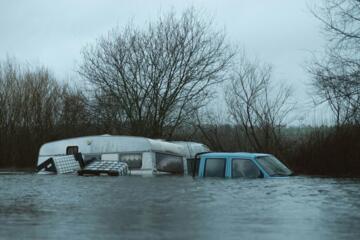
One overlooked point: vehicles flooded on your property are covered by comprehensive auto coverage rather than by either home or flood policies — see whether auto covers natural disasters.
What Happens When You Claim
Two features of the federal claims process differ from a homeowners claim and are worth knowing before rather than during.
A separate proof of loss is required, signed and sworn, with a filing deadline measured from the date of loss. Extensions are routinely granted after major events but they have to be requested. This is a formality that ends otherwise valid claims when it is missed.
Building and contents are adjusted separately, each with its own deductible and its own limit. A household that bought building cover and not contents cover discovers the gap at the point where the furniture is being valued.
Documentation matters more than usual here because floodwater removes the evidence. Photograph the high-water mark before anything is cleaned or removed, keep damaged items until they have been seen where it is safe to do so, and record what was where — the approach is in proving value on a claim and the wider sequencing in the steps most people get wrong after a flood.
Questions People Ask
My lender does not require it. Does that mean I am safe?
No. The requirement follows the mapped zone, and a large share of claims arise outside those zones.
Does it cover a rented property I own?
Yes, and the analysis differs, because the building and the tenant's belongings are covered under separate policies and loss of rental income is not covered by the federal programme at all — see landlord insurance essentials.
Can I buy it as a renter?
Yes. Contents-only coverage is available and is inexpensive relative to replacing everything, though the depreciated settlement basis applies.
Does a flood claim raise my homeowners premium?
They are separate policies with separate histories, though a claims record follows the property and can be visible to other insurers — the mechanism is in how premiums are calculated.
What if I only worry about the basement?
Then federal flood coverage is a poor fit, because below-grade coverage is exactly what it restricts. A water backup endorsement or a private policy is more likely to answer the actual risk.
Is there anything cheaper that helps?
Water backup coverage on the homeowners policy is inexpensive and addresses a different and more common problem than flood. It is not a substitute, but for many inland properties it is the more probable loss — see what the standard policy covers.
How quickly can I get covered?
Generally not for thirty days, which is why this is an off-season decision rather than a forecast-driven one.
The Short Version
Stop reading your flood zone as a price. Federal flood premiums are now built from your specific structure — elevation, foundation, distance to water, rebuilding cost — and increases toward the full risk-based rate are phased in, so ask what that final figure is rather than only this year's.
The zone still answers one question: whether your lender will require coverage. It does not answer whether you need it, and a substantial share of claims come from outside high-risk areas.
Know the three gaps in federal coverage before relying on it: contents are settled at depreciated value, basements are largely excluded, and there is no cover for living somewhere else while the house dries out. Private policies address all three and carry their own trade-offs.
Then answer one question honestly: what would a foot of water on your lowest floor cost, and could you pay it without borrowing.
Sources and Editorial Note
Coverage limits, the contents settlement basis, basement restrictions, waiting periods and the structure-specific pricing methodology used by the National Flood Insurance Program are described at FloodSmart. Flood maps and zone determinations are published through the FEMA Flood Map Service Center, and the scope of federal disaster assistance is set out by FEMA.
Figures circulating for national flood damage totals, the share of homeowners carrying coverage, average premiums and percentage savings from mitigation vary by year and by source and are not reproduced here. Premiums under the current methodology are property-specific, so any national average is of limited use for an individual decision.
Private flood market availability, lender acceptance standards, community rating participation and the treatment of coverage gaps differ by state and by insurer. This article is general information about insurance, not legal or financial advice — confirm the terms with the insurer and with your local floodplain manager before deciding.