The Source of the Water Decides Everything
Two homes flood in the same storm. One claim is paid, one is denied. The difference is not how much water there was — it is where the water came from before it reached the house.
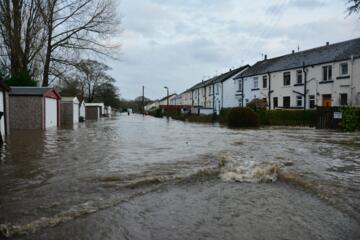
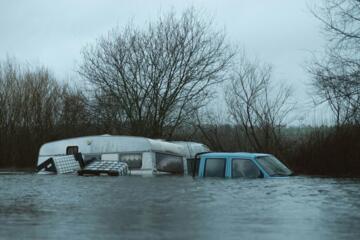
Flood insurance covers rising water: water that touched the ground outside before entering your home. Rivers overtopping, storm surge, rainfall the soil cannot absorb, surface water running downhill into your garage. Your homeowners policy excludes all of it, always, everywhere, and coverage comes from a separate policy.
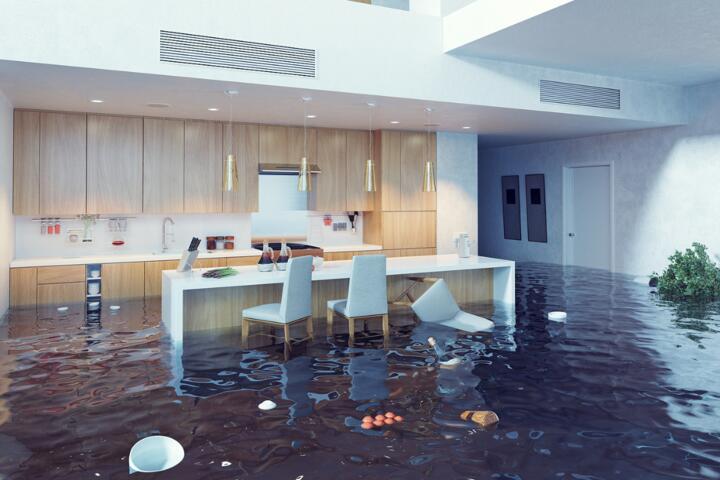
Water backup is an endorsement on your homeowners policy. It covers water or sewage coming up through drains, pipes or a sump pit — a municipal sewer overwhelmed by a storm, a blocked lateral line, a sump pump that fails.
Same storm, two mechanisms, two different products. Neither is included in a standard policy by default.
The Third Category Nobody Warns You About
There is a scenario that falls between the two, and it is common.
Groundwater seeping through foundation walls or up through a basement slab under hydrostatic pressure is generally excluded by your homeowners policy, generally outside the scope of a water backup endorsement, and covered by a flood policy only where there is a genuine general condition of flooding in the area.
So a wet basement wall after a very heavy week of rain, with no sewer involvement and no flooding on the street, frequently means nobody pays. This is a drainage and grading problem before it is an insurance problem, and the fix is exterior — gutters, downspout extensions, grading away from the foundation, a functioning perimeter drain.
Knowing this in advance is worth more than any endorsement, because it is the one water scenario you cannot buy your way out of after the fact.
Flood Insurance: What Changed
Most published guidance on flood insurance pricing is out of date, because the NFIP rebuilt its entire rating methodology.
Under Risk Rating 2.0 — applied to new policies from October 2021, to renewals from April 2022, and fully implemented in April 2023 — premiums are priced from the individual building rather than from its map zone. The inputs include replacement cost value, distance to water, flood frequency and flood type. It is the largest change to how the programme prices risk since it began in 1968.
Three practical consequences.
Your flood zone no longer determines your price. The old tiering, under which a property in a low-risk zone bought a cheap standardised policy, does not describe how pricing works now. Two neighbouring houses in the same zone can be priced quite differently based on elevation, construction and distance to water. Advice quoting a flat figure for a low-risk property is no longer reliable — get a quote for your address.
Most policyholders now pay more. FEMA estimates roughly 77% pay more than they would have under the prior methodology. Increases are capped by statute at up to 18% a year for primary residences, and up to 25% a year for other categories including second homes, non-residential and business properties, and buildings with severe repetitive losses.
It is politically contested. In February 2026 a group of senators formally asked FEMA to terminate Risk Rating 2.0, citing premium increases well above 100% in some flood-prone states and coverage being dropped as a result. Whether anything changes is unknown, but this is an area where the rules may move — check current pricing rather than assuming an older figure still applies.
The Discount Almost Nobody Claims
The Community Rating System gives NFIP discounts of 5% to 45% based on the flood mitigation work your local community does — drainage improvements, floodplain management, public information programmes.
Two things make this worth ten minutes. The discount applies uniformly to policies throughout a participating community regardless of whether the property sits in a high-risk zone. And it is a function of your municipality's classification, not your own actions, so it may already be available to you and simply not applied.
Ask your agent whether your community participates and at what class. If it does not, that is also worth knowing — it is a question worth putting to your local officials.
The Rest of the Flood Basics
- Waiting period: generally 30 days for NFIP coverage to take effect. You cannot buy this with a storm in the forecast. Private flood policies often have shorter waiting periods.
- Limits: NFIP caps at $250,000 for the structure and $100,000 for contents. Higher-value homes need excess flood coverage from the private market.
- Basements are limited. NFIP coverage for below-grade areas is restricted — essentially structural elements and mechanical systems, not finishes or most contents. A finished basement is largely uncovered even with flood insurance.
- Claims happen outside high-risk zones. A substantial share of NFIP claims come from properties outside designated high-risk areas. Being outside a mapped zone reduces your probability; it does not remove it.
- Repeat claims now carry a surcharge. Since April 2023 a prior claims surcharge applies once a building has two or more chargeable flood claims within ten years.
Our guide on whether you need flood insurance covers the decision itself.
Water Backup: The Limit Is the Problem
This endorsement is cheap — commonly $50 to $150 a year — and almost everybody who has it has too little of it.
Agents frequently default to a $5,000 limit. Consider what a backup into a finished basement actually costs. Sewage is category three water, meaning contaminated, so remediation is not a matter of drying things out: porous materials come out, the space is cleaned and sanitised professionally, and only then does reconstruction begin. Drying and remediation alone can consume a $5,000 limit before anyone replaces a single sheet of drywall, and then there is the furnace, the water heater, flooring, trim and contents.
Set the limit against what is actually down there. Add up remediation plus replacement of finishes plus mechanical systems plus contents. For most finished basements the honest figure is well into five figures, and limits of $25,000 or more are available for a modest additional premium.
Two specifics to confirm in the wording. Does it cover sump pump failure, including mechanical failure and failure during a power outage — which is when pumps usually fail? And does it cover both the water damage and the associated mould remediation, or is mould separately sub-limited?
Prevention That Also Affects Claims
A backwater valve on your main sewer line lets waste flow out and closes if the city system tries to push it back. Installation typically runs into four figures, and some insurers offer a premium credit for it. In areas with combined sewer systems it is the single most effective physical mitigation available.
A battery backup sump pump, because a power cut and a heavy storm arrive together. Water-powered backup pumps are an option on municipal supply and run indefinitely without electricity.
Leak sensors, cheap and effective, particularly near the sump pit, water heater and washing machine.
Document your maintenance. Policies contain maintenance provisions, and an insurer can push back on a claim where a pump failed after years without service. Test the pump each spring by pouring water into the pit to confirm the float switch works, and keep a note of when you did it and of any servicing. It takes two minutes and it is the difference between a maintained system and an argument.
Also worth checking whether your area operates under a combined sewer system, which mixes stormwater and sewage and backs up more readily during heavy rain. Municipal utilities generally publish this.
Side by Side
| Flood insurance | Water backup endorsement | |
|---|---|---|
| Water source | Outside, from the ground up | Inside, up through drains or sump |
| Product type | Separate policy — NFIP or private | Add-on to your homeowners policy |
| Typical cost | Varies widely by property under Risk Rating 2.0 | Roughly $50–$150 a year |
| Waiting period | Generally 30 days (NFIP); often shorter privately | Effective once added |
| Limits | $250,000 structure / $100,000 contents (NFIP) | You choose, commonly $5,000–$50,000 |
| Basement coverage | Restricted — finishes largely excluded | Covered up to the limit |
| Required? | Yes, with a mortgage in a high-risk zone | Never — always optional |
When the Insurer Disputes the Source
Because the products divide by origin, a claim can turn entirely on where the water came from — and that is genuinely arguable when a storm produced both street flooding and a sewer surge.
What helps: photographs taken before anything is cleaned up, including the water line on walls and any silt or debris; the timing of when water appeared and where it appeared first; local rainfall records and any municipal notices about sewer overflow; and a plumber's assessment of your lateral line.
If a significant claim is denied on origin, a public adjuster works for you rather than the insurer and can build the forensic case — silt patterns, entry points, weather data. See handling a denied home insurance claim, and the steps people get wrong after a flooded house.
Whichever coverage responds, an existing home inventory is what turns a basement full of ruined possessions into a priced claim.
Two Situations
The endorsement that was sized properly
A municipal storm drain blocks during a summer storm and water comes back through a basement floor drain into a finished space.
The household carries a water backup endorsement well above the default limit. It covers professional remediation of contaminated water and most of the reconstruction. They are out the deductible and a portion of the finishes.
The endorsement cost a modest amount annually. The decision that mattered was not buying it — it was declining the $5,000 default.
The claim that fell on the wrong side of the line
A household outside a designated high-risk zone declines flood insurance on that basis. A tropical system produces localised street flooding and several inches of water enters through the garage.
They claim under their water backup endorsement. It is denied: the water came from outside, across the ground, which makes it a flood — and there is no flood policy.
Nothing was mis-sold and nothing was mishandled. Two products cover two mechanisms, and only one had been purchased.
Both are composite illustrations of common patterns, not accounts of specific individuals.
Frequently Asked Questions
Is water backup the same as flood?
No. Flood is surface water entering from outside. Backup is water or sewage rising through your own drains or sump. Different products, and neither substitutes for the other.
Does flood insurance cover a sewer backup?
Generally not. If the backup was directly caused by a general flooding condition in the area, a flood policy may respond. Otherwise you need the endorsement.
How much backup coverage should I have?
Enough to cover remediation, finishes, mechanical systems and contents in the affected area. For a finished basement that is usually well above the default $5,000 — often $25,000 or more.
Can I buy flood insurance outside a flood zone?
Yes, and a meaningful share of claims come from properties outside high-risk areas. Under Risk Rating 2.0 the price reflects your specific building rather than the zone, so get an actual quote rather than relying on a published average.
Does flood insurance cover my finished basement?
Largely no. NFIP coverage below grade is limited to structural elements and certain mechanical systems, not finishes and most contents. This surprises people who assumed a flood policy made them whole.
What is a backwater valve?
A one-way valve on your sewer line that allows flow out and closes if the municipal system surges back. Some insurers credit it; in combined-sewer areas it is the strongest physical protection available.
My basement walls are damp after heavy rain. Is that covered?
Usually not by anything. Groundwater seepage sits outside the homeowners policy, outside most backup endorsements, and outside flood coverage absent general area flooding. Treat it as a drainage problem.
What about temporary accommodation while the basement is repaired?
If a covered loss makes the home uninhabitable, additional living expenses coverage applies — see what it pays for. It is a separate limit with its own documentation requirements.
The Short Version
Your homeowners policy excludes both rising water and drain backups by default. Flood needs a separate policy with a 30-day wait; backup needs an endorsement that takes effect immediately and costs very little.
Three things to do. Add water backup at a limit that reflects what is actually in your basement, not the $5,000 default. Get an actual flood quote for your address, because zone-based rules of thumb no longer describe how the NFIP prices anything. And ask whether your community participates in the Community Rating System — that discount runs to 45% and applies whether or not you are in a high-risk zone.
Then, before the next storm: test the sump pump, note the date, and check where your downspouts drain.
Sources and Editorial Note
Flood insurance pricing methodology, implementation dates, statutory rate caps and Community Rating System discounts are documented by FEMA; the estimate that roughly 77% of policyholders pay more under the current methodology is FEMA's own. Congressional correspondence seeking termination of the methodology dates from February 2026, and the position may change. Claim and peril context draws on the Insurance Information Institute.
Water backup endorsement wording, limits, sump pump provisions and mould sub-limits vary by carrier and state, as do maintenance provisions. Confirm what you hold against your declarations page and endorsements rather than relying on any general description, and contact your state insurance department with complaints. This article is general information, not advice on your specific policy.