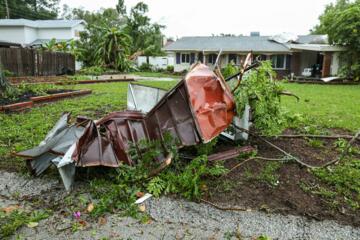
A Declaration Turns On a Second Set of Rules
Almost everything written about policyholder rights describes the ordinary claim: a burst pipe, a fallen tree, a kitchen fire. Those rules still apply in a catastrophe. But when a wildfire, hurricane or flood produces a state or federal disaster declaration, a separate layer of state law switches on, and it holds the protections that matter most when thousands of homes are damaged at once.
That layer typically includes money paid before any inventory exists, a floor under how long temporary housing is funded, a bar on the insurer walking away at renewal, extra time to file, and free state mediation. It is invisible until the declaration happens, and none of it arrives unasked. You have to know it exists. For why a large loss moves slowly even when nobody is obstructing it, see the real reason claims get delayed.
What Every Insurer Owes You, Declaration or Not
Four duties apply to any claim, in every state. They come from state unfair claims settlement practices acts, nearly all adapted from the same model law, and from the implied covenant of good faith and fair dealing courts read into every insurance contract.
- Prompt acknowledgment and investigation, on clocks each state sets: a window to acknowledge, another to begin investigating, another to accept or deny once a proof of loss is complete.
- A written explanation of any denial, citing the specific policy language relied on. A verbal ""that's not covered"" is not compliance.
- A complete copy of the policy on request, endorsements included. The endorsements are where the surprises live.
- No misrepresentation of policy terms or of your rights, which includes failing to mention coverage that plainly applies.
Ordinance or law coverage is the recurring example of that last one. Standard coverage pays to replace what was there, not to bring a rebuild up to a code that changed since the house went up, and after a wildfire that gap can be enormous. It is a separate limit and widely under-purchased — ask whether you have it. See what to change before a predicted disaster and how insurers calculate replacement cost.
What Switches On After a Declared Disaster
These are state law and vary considerably. The pattern below recurs across disaster-prone states, but caps and durations change with legislative sessions — treat it as a list of things to ask about, not a statement of your entitlements.
| Protection | What it typically does | Where it comes from |
|---|---|---|
| Contents advance without an inventory | A set percentage of your personal property limit, paid up front on a total loss with no room-by-room list. California requires 30% of the contents limit up to a cap. | State statute, triggered by the declaration |
| Minimum additional living expenses period | A floor on how long temporary housing is funded, with extensions where rebuilding is delayed by circumstances outside your control. California sets 24 months as the minimum; Colorado adopted comparable rules after the Marshall Fire. | State statute |
| Non-renewal moratorium | Bars the insurer from declining to renew in affected areas for a set period, whether or not you filed. | State statute or emergency order |
| Extended filing and proof-of-loss deadlines | Bulletins extending contractual and statutory deadlines for affected ZIP codes. | Insurance department bulletin |
| Free state mediation | A neutral mediator for disputed residential claims, separate from appraisal and litigation. | Insurance department program |
| Premium grace periods | Suspends cancellation for non-payment for a set period after the event. | Emergency order |
Bulletins go up on the insurance department's website within days of a declaration and are the fastest way to learn what applies to you; the NAIC directory links to all of them. Whether a declaration exists is public record — FEMA lists federal declarations by date and county, though many state protections trigger on a governor's declaration instead.
The Two Deadlines That End Claims
Proof of loss. Most policies require a formal, sworn statement of the loss within a set period after the insurer requests it, commonly 60 days. The clock starts at the request, so the insurer chooses when it starts, and missing it hands over a complete technical defense to the whole claim. If you cannot compile it in time, request an extension in writing before the deadline and keep the response.
The suit limitation clause. Your policy also contains a contractual deadline for bringing legal action, usually measured from the date of loss and often shorter than the state's general statute of limitations — one year in some states. It is not the same as the filing deadline and it does not pause while you negotiate.
Supplemental claims, the ones filed when hidden damage appears months into a rebuild, have their own limits, and several states have shortened them recently. Reopening is a real right with an expiry date.
The Public Adjuster Statistic, and Where It Actually Comes From
One figure is quoted constantly: claims handled with a public adjuster settle several hundred percent higher, often given as 574% and attributed to the Insurance Information Institute.
The attribution is wrong. The number traces to an analysis produced for the Florida legislature roughly fifteen years ago, examining claims from the 2005 hurricane season. Three things follow.
- It describes one state, one catastrophe era, and a claims environment that has since been rewritten by statute.
- The same analysis found a dramatically smaller advantage for ordinary, non-catastrophe claims. The headline figure is the catastrophe subset, which is the least representative slice.
- It measures the gross settlement, before the adjuster's fee comes out of it.
That does not make public adjusters useless. It makes the number useless as a reason to hire one. The honest version: a licensed public adjuster works for you rather than the carrier, builds a line-item estimate in the same software the insurer uses, and earns the fee on large, complex or contested losses and on total losses where an inventory must be built from nothing. On a straightforward claim with a competent contractor, it usually will not pay for itself.
Fees are a percentage of the settlement and are capped in several states — Florida, for example, applies a lower cap to claims arising from a declared emergency during the first year. Ask what your state's cap is, and read whether the fee applies to the whole settlement or only to amounts recovered above the insurer's existing offer. That one clause changes the economics completely.
Appraisal Decides the Amount, Not the Coverage
Most property policies contain an appraisal clause. Each side appoints an appraiser, the two select a neutral umpire, and the decision binds both parties on the amount of loss. It is usually faster and far cheaper than litigation.
The commonest use after a catastrophe is demand surge: the insurer prices the rebuild on standard regional rates while local contractors, competing for scarce labor and materials, quote substantially more. Dated written bids from licensed local contractors turn that from an opinion into evidence, and if the insurer will not move, the gap is a pure disagreement about amount.
What appraisal cannot do is decide whether something is covered. If the dispute is ""this is excluded"" rather than ""this is worth less than you say,"" appraisal is the wrong tool and can waste months. Sort your dispute into one bucket before starting. Three caveats: you pay your own appraiser and share the umpire's cost; some insurers have narrowed or removed the clause, so confirm yours exists; and an award on amount does not stop a later denial on a coverage ground the insurer preserved.
Bad Faith Is a State-Level Right, and It Varies Wildly
Bad faith is the remedy for an insurer that unreasonably delays or denies, lowballs against its own evidence, or misrepresents the policy. It is also where general advice misleads most, because the remedies are nowhere near uniform.
Washington's Insurance Fair Conduct Act lets a first-party claimant unreasonably denied coverage recover actual damages, with the court permitted to award up to three times that amount plus attorney fees. That is powerful, and it is not the national norm.
Florida moved the other way. Legislation enacted in late 2022 eliminated one-way attorney's fee awards in property insurance litigation, which for decades was what made small and mid-sized disputes economically viable to pursue; 2023 legislation tightened things further. Advice written before 2023 about litigating a Florida property claim is now actively wrong.
Several states also require formal pre-suit notice with a cure period. Skip it and the case does not survive. Whatever your state, the file decides it: a dated log of every call with names, every written communication, every unanswered request — the discipline set out in claim documentation protocols. For an ordinary denial, see handling a denied home insurance claim.
The Clause That Reverses the Concurrent Causation Rule
For anyone in a hurricane or flood zone this is the most consequential item here, and the standard advice about it is out of date.
The classic argument runs: wind is covered, flood is not, so if wind opened the roof before water entered, the wind damage is payable. That is the efficient proximate cause doctrine, and it is correct in states that apply it.
Most modern homeowners policies contain an anti-concurrent causation clause written to defeat it, excluding loss caused directly or indirectly by an excluded peril regardless of any other cause contributing concurrently or in any sequence. Where courts enforce that wording, the presence of flood can bar the entire loss even though wind contributed.
Enforcement splits by state: California rejects these clauses by statute, several states limit them, many enforce them as written. So ""wind or water"" has no general answer, which is exactly why separate flood coverage matters — see why floods are usually not covered and how coverage triggers are structured. Get the forensic evidence either way: sequence and cause still matter in the states that limit these clauses, and they matter in negotiation everywhere.
One note on liability claims
If your fire spreads to a neighbor's property, the insurer must defend you and it appoints the lawyer. Where it sends a reservation of rights letter — defending now, reserving the option not to pay the judgment — that lawyer sits in a conflict, since how the case is defended can affect whether coverage exists. The remedy, independent counsel of your choosing at the insurer's expense, originates in California law and is not a national right. What applies everywhere: the reservation of rights letter names exactly which parts of the claim the insurer thinks may not be covered, so read it closely.
What Not to Sign
- A release of all claims, until the full scope of damage is known. Fast-track checks often carry release language, and damage behind drywall or below a foundation surfaces months later.
- A blank work authorization from a contractor who arrives unsolicited. Read what happens if the insurer pays less than the contractor bills.
- Anything transferring your claim rights to a third party. Several states have restricted these arrangements after widespread abuse.
- A proof of loss you have not verified. It is a sworn statement and errors are not harmless.
One thing to make sure you do collect: the depreciation holdback. On a replacement cost policy the first payment is the depreciated value, and the balance is released only when you finish the work and submit final invoices. People forget, and never receive the rest of their money. Same mechanic as in roof claims.
One Situation Worth Walking Through
For fire specifically, the sequence matters as much as the rights — see the order to handle insurance steps after a fire. A household loses everything in a wildfire inside a declared disaster area. The insurer requests an itemized personal property inventory — an impossible task when nothing remains to itemize and the household is living out of a hotel. The state's disaster statute requires a substantial percentage of the contents limit to be advanced with no inventory at all. Requesting it in writing, citing the statute, produces liquidity in weeks rather than months, and the detailed inventory gets built afterwards at a sane pace. See documenting value.
A composite illustration of a common pattern, not an account of specific individuals.
Order of Operations
| When | Do | Why it matters |
|---|---|---|
| First 48 hours | Mitigate further damage; keep every receipt | Secondary damage from failing to mitigate can be excluded |
| First week | Request a complete copy of the policy with all endorsements | Endorsements decide most disputes |
| First week | Check the insurance department site for disaster bulletins | Deadline extensions are published there, not sent to you |
| First week | Request advance payments for contents and living expenses | May be a statutory entitlement in a declared disaster |
| Ongoing | Keep a dated call log and expense diary | The basis of any later bad faith or mediation position |
| On the estimate | Get competing local bids before responding | Turns a price disagreement into documented evidence |
| Before deadline | File the proof of loss, or request an extension in writing | A missed proof of loss is a complete defense |
| After the work | Submit final invoices and completion documents | Releases the depreciation holdback |
Frequently Asked Questions
Can they cancel my policy while the claim is open?
Mid-term cancellation is restricted by state law to narrow grounds such as non-payment, fraud or material misrepresentation. Filing a claim is not one of them. Non-renewal at the end of the term is a different question and is generally permitted, though many states impose a temporary moratorium on non-renewals in declared disaster areas.
Does filing raise my premium?
Catastrophe losses move regional base rates whether or not you filed, so absorbing legitimate damage rarely protects you from the increase. Claim history is a separate factor and matters more for repeated non-catastrophe claims. See how premiums are set.
The Short Version
Your baseline rights apply always: prompt investigation, a written denial citing policy language, a full copy of the policy, no misrepresentation of what you are owed.
A declared disaster adds a second set most people never find out about — advance payments without an inventory, a floor under temporary housing, extended deadlines, a bar on non-renewal, free mediation. Your insurance department publishes them in bulletins within days of the event. Go and read them.
Two deadlines can end an otherwise valid claim: the proof of loss, and the suit limitation clause. Diary both the week the loss happens. And be skeptical of numbers used to sell you services — the much-quoted public adjuster statistic is old, regional, catastrophe-specific and measured before fees. There are good reasons to hire one; that figure is not among them.
Sources and Editorial Note
Insurer duties on acknowledgment, investigation, written denial and misrepresentation derive from state adaptations of the model unfair claims settlement practices act and from the implied covenant of good faith and fair dealing; the specific clocks are set state by state and published by each state insurance department. The disaster-triggered protections described reflect California Insurance Code provisions on contents advances and minimum additional living expenses periods, and comparable Colorado legislation enacted after the Marshall Fire; caps and durations are amended frequently. Washington's treble damages provision arises under its Insurance Fair Conduct Act; the Florida changes reflect Senate Bill 2-A of December 2022 and subsequent 2023 legislation. Federal declarations are listed by FEMA, and catastrophe context draws on the Insurance Information Institute.
The frequently cited claim that public adjuster involvement raises settlements by 574% is not an Insurance Information Institute figure. It originates in an analysis prepared for the Florida legislature concerning 2005 hurricane season claims and should not be read as a current or national result.
Anti-concurrent causation enforcement, appraisal availability, bad faith remedies, pre-suit notice requirements, independent counsel rights, public adjuster fee caps and supplemental claim deadlines are state-specific and change regularly. This article is general information, not legal advice and not advice on your specific policy. Confirm every point against your declarations page and endorsements, contact your state insurance department, and consult a licensed attorney in your state before relying on any deadline or remedy described here.