Safety Net for Tenants
Renters insurance is a tripartite financial tool designed to cover personal property, liability, and additional living expenses. Unlike a landlord’s policy, which only covers the physical structure of the building, your policy ensures that if a pipe bursts or a laptop is stolen from your car, you aren't left footing the bill alone. It is essentially a contract that transfers your highest financial risks to an insurer for a small, predictable fee.
In practice, consider a scenario where a kitchen fire in an adjacent apartment triggers the sprinkler system, ruining your $2,000 velvet sofa and high-end gaming rig. Without coverage, that is a total loss. With a standard HO-4 policy, the insurer cuts a check for the replacement value, minus your deductible. This isn't just for "emergencies"; it is a foundational component of modern financial planning.
Statistically, the Insurance Information Institute (III) notes that while 95% of homeowners have insurance, only about 55% of renters do. This gap is alarming considering the average renter owns roughly $20,000 to $30,000 worth of property. Furthermore, the average annual premium in the U.S. hovers around $170—or roughly $14 per month—making it one of the most affordable risk-management tools available today.
Common Rental Mistakes
The most significant mistake renters make is the "it won't happen to me" fallacy. They assume the landlord is responsible for everything within the four walls of the unit. Legally, this is false. If your guest trips over a rug and breaks their wrist, your landlord’s insurance won't cover their medical bills—you could be held personally liable for thousands of dollars in legal and medical costs.
Another major pain point is the failure to distinguish between "Actual Cash Value" (ACV) and "Replacement Cost Value" (RCV). If you bought a MacBook for $2,000 five years ago, an ACV policy might only pay you $400 today due to depreciation. An RCV policy, however, pays what it actually costs to buy a brand-new equivalent model. Opting for ACV to save $2 a month often results in a massive financial shortfall when a claim occurs.
Finally, many tenants fail to document their belongings. After a total loss event like a fire, trying to recall every pair of shoes, kitchen appliance, and electronic device from memory is impossible. This "memory tax" results in significantly lower claim payouts because if you can't prove you owned it, the insurance company isn't obligated to pay for it.
Protection Solutions
Opt for Replacement Cost Coverage Over Cash Value
Always select Replacement Cost Value (RCV) when configuring your policy. While Actual Cash Value (ACV) might lower your premium by 5-10%, the payout difference during a claim can be 300% or more. For example, if a five-year-old TV is destroyed, RCV gives you the funds for a new 4K display, whereas ACV gives you the "garage sale" value of an old unit.
Utilize Digital Inventory Tools for Documentation
Documentation is the currency of insurance claims. Use apps like Encircle or Sortly to create a room-by-room digital inventory. Take photos of serial numbers and save digital receipts to a cloud service like Google Drive or Dropbox. In the event of a catastrophic loss, having an off-site, timestamped record of your assets speeds up the claims process by weeks and ensures you receive every cent you are owed.
Bundle and Save with Multi-Line Discounts
If you already have auto insurance with carriers like State Farm, Geico, or Progressive, adding a renters policy often triggers a "multi-line" discount. In many cases, the discount applied to your auto insurance is so significant that the renters policy effectively becomes free. Always ask your agent to run a "bundled" quote before purchasing a standalone policy.
Adjust Your Deductible to Balance Risk and Reward
Your deductible is the amount you pay out of pocket before insurance kicks in. Increasing your deductible from $250 to $1,000 can reduce your monthly premium by up to 25%. This is a smart move if you have a $1,000 "emergency fund" in a high-yield savings account. Use the insurance for "catastrophes," not small inconveniences, to keep your long-term rates low.
Understand the "Off-Premises" Coverage Benefit
Most renters don't realize their policy follows them. If your bicycle is stolen from outside a coffee shop or your suitcase is swiped at an airport, your renters insurance typically covers it. This "off-premises" protection usually covers up to 10% of your total personal property limit. For someone with $30,000 in coverage, that's $3,000 of protection for items outside the home.
Incorporate Liability for Full-Spectrum Defense
Standard policies include $100,000 in liability coverage, but in a litigious society, bumping this to $300,000 is often a matter of an extra $10 to $20 per year. This covers you if you accidentally cause a fire that damages the building or if your dog bites someone at the park. It covers both the settlement and the legal defense costs, which can be astronomical even if you win.
Real-World Impact
Case Study 1: The Burst Pipe Crisis
A tenant in a Chicago high-rise, insured through Lemonade, experienced a major pipe burst while on vacation. Water damage ruined $12,000 worth of electronics, furniture, and clothing. Additionally, the apartment was uninhabitable for 14 days. Because the tenant had "Loss of Use" coverage, the insurer paid $2,800 for a hotel and meals, plus $11,500 for property replacement. Total out-of-pocket for the tenant: a $500 deductible.
Case Study 2: The Liability Save
A college student in Austin, Texas, had a small policy through Liberty Mutual. During a gathering, a guest tripped over a loose laptop cord and suffered a concussion requiring an ER visit. The guest’s health insurance company attempted to subrogate (sue the student) for the $8,000 medical bill. The student's renters insurance liability coverage handled the legal negotiation and paid the settlement in full, protecting the student’s future earnings from a judgment lien.
Top-Tier Providers
| Provider | Best For | Unique Feature | Avg. Cost |
|---|---|---|---|
| Lemonade | Tech-savvy users | AI claims & Giveback | $5 - $15 |
| State Farm | Personal service | Local agent network | $12 - $20 |
| Allstate | Comprehensive | Identity theft add-on | $15 - $25 |
| Toggle | Customizability | Category "toggling" | $5 - $20 |
Common Pitfalls
One of the most frequent errors is under-insuring. Tenants often look at their old couch and think it’s worth nothing, but they forget to calculate the cost of their entire wardrobe, kitchen pantry, and toiletries. A "guestimate" is usually 50% lower than reality. Use a calculator tool to get a more accurate number before signing the policy.
Ignoring "Special Limits" is another trap. Most standard policies cap payouts for jewelry, firearms, and professional equipment (like a photographer's camera) at $1,500. If you have a $5,000 engagement ring, it is not fully covered under a basic policy. You must "schedule" these items—meaning you add an endorsement or floater specifically for that high-value item—to ensure full protection.
Lastly, don't assume roommates are covered under your policy. Unless you are related by blood or marriage, or specifically named on the policy, your insurance only covers your stuff. If your roommate doesn't have their own policy, they are completely exposed. In some states, you can add a roommate to your policy for a small fee, but usually, it is cleaner for each individual to have their own coverage to avoid claims disputes.
FAQ
Does renters insurance cover flood damage?
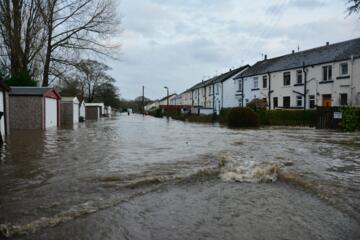
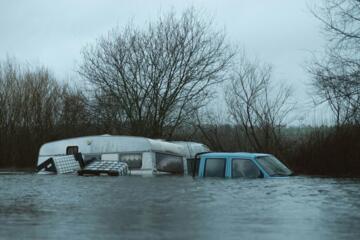
Standard policies cover water damage from burst pipes or rain through a broken window, but they almost never cover "floods" (rising water from the ground). If you live in a flood-prone area, you must purchase a separate flood insurance policy through the National Flood Insurance Program (NFIP) or a private insurer.
Will my policy cover my pet’s actions?
Generally, yes. Liability coverage typically applies if your dog bites someone or causes damage to someone else's property. However, some insurers have "blacklisted" breeds (like Pit Bulls or Rottweilers) or may exclude pet damage to the rental unit itself. Always check your specific policy’s animal liability clause.
What happens if my apartment becomes unlivable?
This falls under "Loss of Use" or "Additional Living Expenses" (ALE). If a covered peril (like fire) makes your home uninhabitable, your insurer pays for the "extra" costs of living elsewhere, including hotel bills and the difference in your grocery/dining expenses. This is often the most valuable part of a policy during a major disaster.
Is my stuff covered if it's in a storage unit?
Yes, most policies provide coverage for personal property stored away from your home. However, the limit for off-premises property is usually 10% of your total personal property coverage. If you have $20,000 in coverage, items in storage are protected up to $2,000.
Does renters insurance cover earthquakes?
In most states, earthquake damage is excluded from standard HO-4 policies. If you live in a high-risk zone like California or Washington, you will need to add an earthquake endorsement or buy a separate policy. The premium for this is usually calculated based on the proximity to fault lines.
Author’s Insight
In my years of analyzing risk management, I have seen more financial lives upended by a lack of renters insurance than by stock market crashes. People think of insurance as an expense, but I view it as an "asset-protection subscription." My best advice is to never settle for the minimum liability required by your lease; that $100,000 limit disappears instantly in a serious lawsuit. Spend the extra $2 a month for $300,000 in liability—it is the single best ROI you will ever find in the financial world. Also, remember to update your inventory every time you make a major purchase over $500.
Summary
Securing a renters insurance policy is a high-impact, low-cost move that provides essential financial security. By selecting Replacement Cost Value, documenting your assets digitally, and understanding the nuances of liability and off-premises coverage, you transform a simple monthly bill into a robust safety net. Don't wait for a disaster to realize your landlord's policy doesn't protect you. Evaluate your needs, compare quotes from providers like Lemonade or Allstate, and get covered today—your future self will thank you for the foresight.